
Standing in Prevalia with empty pockets while other adventurers parade around in pristine gear is a frustrating experience for any player. Navigating the player driven economy requires more than just mindlessly farming overland spawns; it demands a tactical approach to production. Discovering reliable tailoring and carpentry profitable crafting strategies allows you to build a resilient gold making engine that works around the clock.
Both Tailoring and Carpentry serve as vital pillars of the Outlands economy. While combat builds risk durability loss and player killers, dedicated crafters quietly accumulate fortune by supplying the daily essentials adventurers and homeowners desperately need. By aligning your workshop with server demand, you can convert raw materials into massive gold payouts.
Capitalizing on the Lucrative Housing Market with Carpentry

Housing remains one of the largest gold sinks on UO Outlands, and custom housing add-ons represent an endless revenue stream. Players continually purchase customized properties, and every new homeowner needs functional furniture, containers, and aesthetically pleasing decorations. High end carpentry exploits this persistent demand by offering high utility items that adventurers cannot simply pick up from dungeon drops.
Focus your early carpentry production on practical necessities like Wooden Chest and Nightstand. As your skill climbs into the grandmaster tier (Level 120) , shift your focus toward Storage Shelf and Storage Locker. These specialized housing items command hefty premiums on vendor malls because they provide both social prestige and organizational utility.
High Demand Carpentry Products
Not all wooden items generate equal profit margins on player vendors. To maximize gold efficiency per board, prioritize items that players buy in bulk or pay heavily for convenience:
- Resource Storage Shelves and Add-on Deeds: Essential fixtures for every dungeon runner returning home with overloaded packs.
- Aspect Kit: players need
 Aspect Kit to To Unlock an Aspect.
- Instruments Crafting: High quality
 Lute and
 Tambourine crafted from Rose, Vere, Vale, and Avar Woods provide bards with Skill, Damage and Accuracy bonuses.
 Aspect Kit to To
 Lute and
 Tambourine crafted from Rose, Vere, Vale, and Avar Woods provide bards with Skill, Damage and Accuracy bonuses.
Dominating Armor and Utility Markets with Advanced Tailoring
Tailoring on Outlands goes far beyond basic leather tunics and cloaks. The modern server meta relies heavily on specialized cloth tiers, exceptional quality satchels, and customized leather armor suites designed for specific Aspect builds. Supplying these everyday combat accessories guarantees a high volume of repeat clientele.
Exceptional quality leather armor provides crucial survivability for dexers and hybrid archers who prioritize weight and stamina regeneration. Furthermore, bone armor set crafted with leather variants yields exceptional resists that dungeon divers eagerly snap up before tackling high level sanctuaries. Keeping your vendors stocked with standardized armor packages saves buyers time and ensures consistent sales.
Expanding into Fashion and Utility Storage
Cosmetics and inventory management represent a hidden goldmine for enterprising tailors. Backpacks, Satchels, and decorative cloaks sell at substantial markups. Players consistently pay extra gold to personalize their avatars and streamline their sorting systems.
High Demand Tailoring Products
High demand tailoring products are driven by player customization, PvM progression, and weekly Society Jobs. The most profitable and heavily sought after tailoring items include:
- Aspect Cloth: Requires 120 Tailoring, 1 Wool, and 1 Aspect Distillation. This is the most consistent high end seller because players need it to upgrade and maintain their specialized PvM Aspect gear.
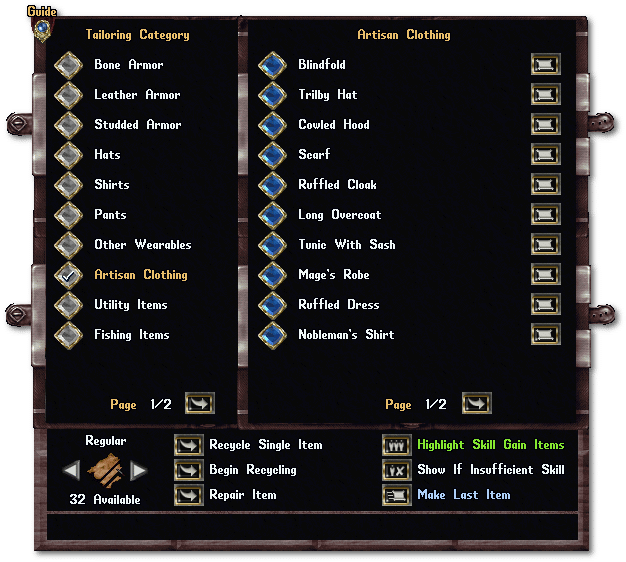
- Artisan Clothing: Requires 120 Tailoring and Mastercrafting Diagrams (MCD). High end cosmetic pieces like the Long Overcoat, Mage’s Robe, Cowled Hood, and Braced Collars are highly sought after by players looking to custom dye high tier outfits.
- Containers & Utility Gear: Standard and high tier variants of Leather Satchels, Potion Satchels, Quivers, and Fishing Nets are constantly consumed by active adventurers.
Optimizing Resource Management and Material Sourcing
Your profit margin depends directly on how efficiently you procure raw cotton, flax, hides, and timber. Purchasing raw materials straight from the Prevalia market diminishes your bottom line, whereas establishing efficient gathering routes dramatically enhances profitability. Integrating an alt-character dedicated to lumberjacking or skinning will insulate your crafting operation from market price spikes.
For leather create a dedicated Dungeon Scavenger Build utilizing Forensic Evaluation and a skinning knife. If you follow high end PvM players clearing deep dungeon levels (like Aegis or Inferno), you can skin the massive monster corpses they leave behind, pulling thousands of hides out for free.
If you are buying from player vendors, look for Commodities (deeds representing 5,000 units) via the Outlands Discord trade channels. Buying in bulk commodities significantly drops the gold per unit ratio compared to buying small player vendor stacks.
Vendor Placement and Pricing Optimization
Even the finest mastercrafted goods will gather dust if potential buyers cannot find your vendor. Securing vendor space near high traffic hubs, such as moongates, popular bank branches, or established guild vendor malls, is vital for steady sales velocity. Consistent foot traffic turns casual browsers into lifelong customers.
Maintain clean, organized vendor bags with distinct labeling and competitive price points. Price utility goods slightly below town vendor saturation to encourage bulk purchases, while keeping rare decorative goods priced high to capture collector value. Tracking market fluctuations every week ensures your stock turns over quickly, freeing up capital for continuous crafting runs.
Final Thoughts
By coupling the structural necessity of carpentry with the dynamic wearable market of tailoring, your artisan enterprise will continuously generate reliable wealth across the ever expanding lands of Outlands.